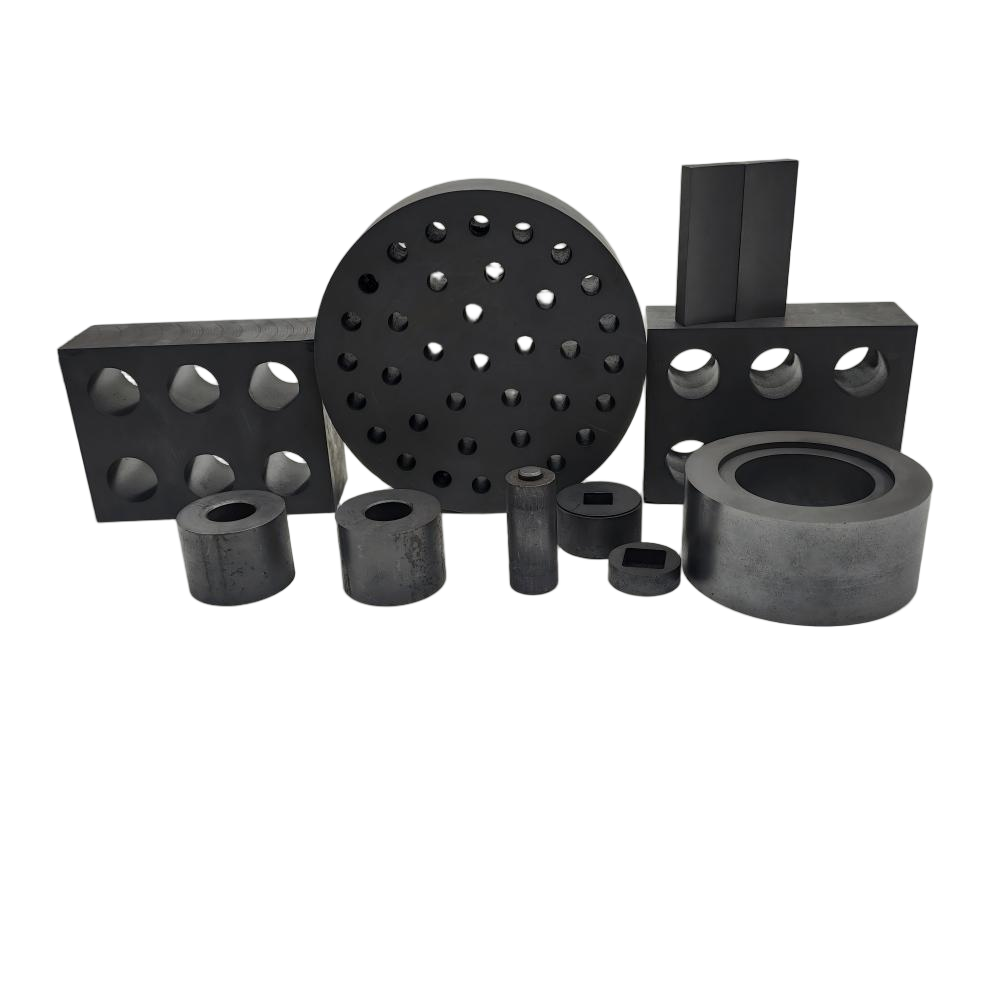
Graphite processing is a common manufacturing process used to produce various graphite products, including graphite electrodes, graphite gaskets, graphite seals, etc. The production process typically includes raw material preparation, molding, heat treatment, machining, and quality control. Below is an overview of the general production process and quality control methods for graphite processing:
1. Raw Material Preparation: The raw materials for graphite processing are mainly natural graphite powder or artificial graphite powder. In the raw material preparation stage, the raw materials need to be screened and ground to ensure uniform particle size and composition.
2. Molding: Molding is one of the key steps in graphite processing, usually using compression molding or casting molding. In the compression molding process, graphite powder is compressed through a mold to form a preliminary product. In the casting molding process, molten graphite material is poured into a mold and cooled to form the finished product.
3. Heat Treatment: Molded graphite products usually require heat treatment to improve their density, strength, and high-temperature resistance. The heat treatment process includes carbonization and graphitization of the graphite, and the control of temperature and time has a significant impact on product quality.
4. Machining: Machining is the final process in the production of graphite products, including precision machining and surface treatment. Common machining methods include turning, milling, and grinding. These machining processes can produce graphite products with high precision and good surface finish.
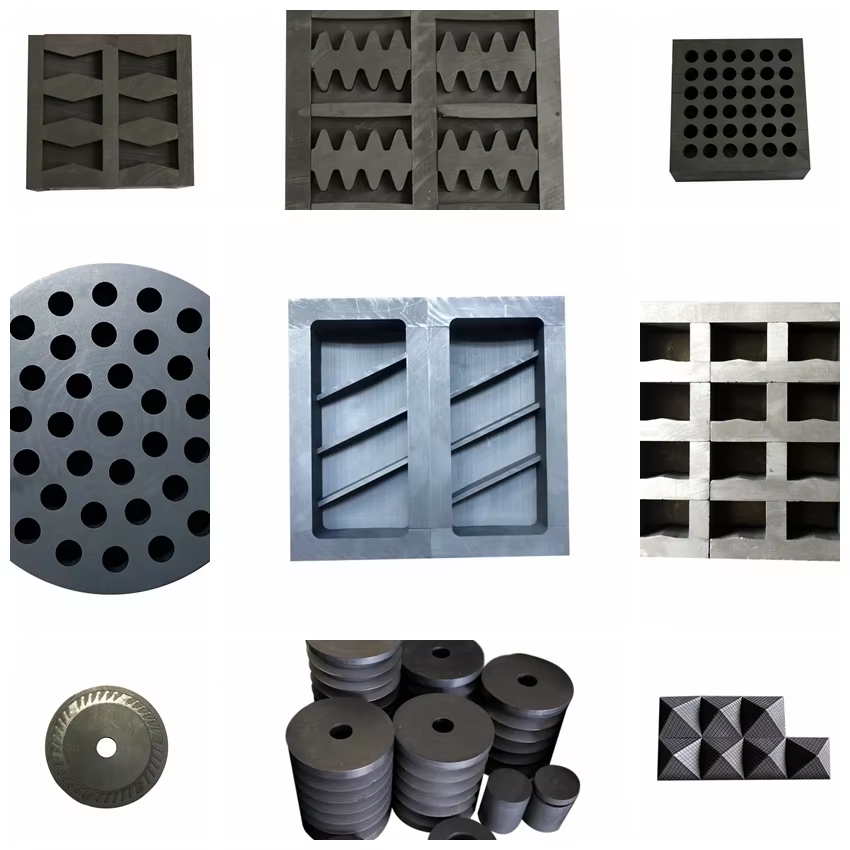
5. Quality Control:
Throughout the entire production process, strict quality control is required to ensure that the products meet customer requirements and standards. The main aspects of quality control include the following:
Raw Material Inspection
Chemical composition analysis and particle size testing of raw materials to ensure stable raw material quality.
Molding Process Control
Controlling parameters such as pressure, temperature, and time during the molding process to ensure the density and dimensional accuracy of the product.
Heat Treatment Control
Controlling parameters such as temperature and holding time during the heat treatment process to ensure that the material structure and performance of the product meet the requirements.
Machining Quality Inspection
Dimensional inspection and surface quality inspection of the machined product to ensure that the accuracy and appearance quality of the product meet the standards.
Final Inspection
Comprehensive inspection and testing of the finished product, including physical performance testing, chemical composition analysis, and appearance inspection, to ensure that the overall performance of the product meets customer requirements. Through strict quality control and quality management, the stable quality of graphite products can be ensured, meeting customer needs and standard requirements. At the same time, continuously optimizing production processes and technical methods to improve production efficiency and product quality is also an important direction for the development of the graphite processing industry.