

Graphite Products: Core Enablers of Low-Carbon Transformation Across Industries
In 2025, the global implementation of "carbon neutrality" is accelerating, and material innovation has become the key to cost reduction and carbon emission reduction. According to data from the International Energy Agency (IEA), graphite products, with their characteristics of high temperature resistance, excellent electrical and thermal conductivity, and recyclability, have achieved a 28% growth rate in applications in the photovoltaic, nuclear energy, and high-end chemical industries, reshaping the low-carbon competitiveness of the industrial chain in diverse forms.
Photovoltaic Industry: Graphite Thermal Field Components Improve Quality and Efficiency
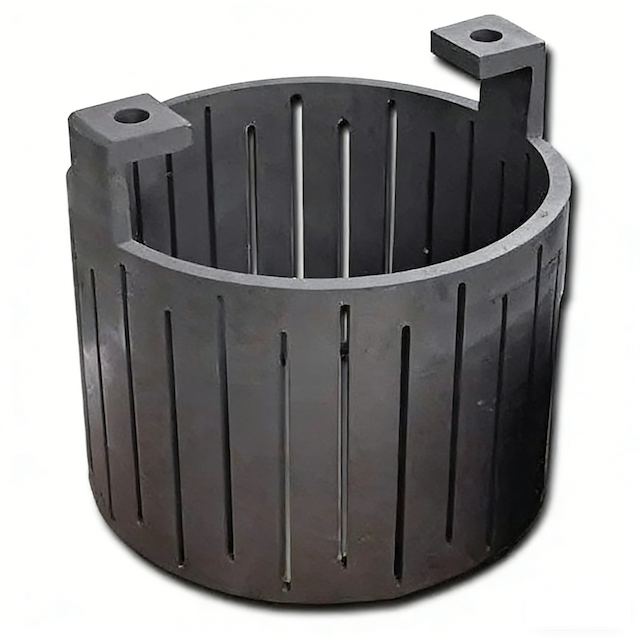
Against the backdrop of global photovoltaic installed capacity exceeding 600GW, graphite thermal field components, as the core of monocrystalline silicon growth furnaces, directly affect crystal purity and energy consumption. After adopting high-density graphite crucibles, leading photovoltaic enterprises have shortened the monocrystalline silicon growth cycle by 12%, reduced unit energy consumption by 18%, and the components can be recycled and reused more than 5 times, reducing the carbon footprint of a 1GW power station by 3,000 tons. The new generation of isostatic graphite thermal field components can withstand high temperatures of 1650℃, with a thermal expansion coefficient as low as 1.8×10⁻⁶/℃, helping to increase the silicon wafer conversion efficiency by 0.5 percentage points, enabling a 1GW power station to generate an additional 50 million kilowatt-hours of electricity annually.
Nuclear Energy Sector: Nuclear-Grade Graphite Secures Safety
In the transition to clean energy, the stable power supply value of nuclear energy has become increasingly prominent. Nuclear-grade graphite products, the core of nuclear reactors, are responsible for neutron moderation and heat transfer. In 2025, more than 80% of newly built nuclear power plants worldwide will use them as moderating materials. Compared with traditional heavy metals, nuclear-grade graphite can reduce the reactor volume by 30%, lower construction costs by 25%, and extend the service life to over 40 years. Domestic nuclear-grade graphite has a boron content controlled below 0.5ppm, applied in third-generation nuclear power technology, making the unit carbon emission per kilowatt-hour of the unit only 12g, far superior to coal-fired power's 820g.
High-End Chemical Industry: Graphite Equipment Solves Corrosion Problems
In the green transformation of the chemical industry, graphite chemical equipment has become an ideal alternative to metal equipment. Products such as graphite heat exchangers and absorbers can withstand extreme working conditions from -20℃ to 200℃, with excellent chemical stability. Their heat transfer coefficient is 2-3 times that of ordinary metal equipment, which can reduce reaction energy consumption by 20%-30%. After a fine chemical enterprise adopted graphite falling film absorbers, the tail gas absorption rate increased from 95% to 99.8%, reducing annual harmful gas emissions by 120 tons, lowering steam consumption by 22%, and the maintenance cycle is 3 times that of metal equipment with recyclability.
Three Major Innovation Trends in 2026
In the future, graphite products will make breakthroughs in three major directions: first, the mass production of graphene-modified materials, with strength and electrical conductivity increased by 50%; second, the deepening of customization, compressing the delivery cycle of integrated solutions to 15 days; third, the upgrading of recycling technology, increasing the material recovery rate from 80% to 95%, further reducing the whole-life cycle cost.
With the core advantages of "low carbon, high efficiency, and durability", graphite products are becoming the "invisible engine" for the transformation of various industries, and their market potential will continue to be released in the next five years.